 We’ve all been there – beginners and intermediates, professionals and amateurs. We’ve all struggled, at least once in our musical experience, with the devastating emotional effects of a piano failure.
It took me many years (and many mistakes and failures of all types) to understand that there is always a choice, that suffering can be avoided and that everything is a question of perspective.
Why are failures so painful and so difficult to handle? Because we empower them by giving them importance.
Let’s take it one step at a time:
1. ENJOY what you’re doing!
Let me ask you a very simple question: Do you enjoy playing piano? Be honest! If you don’t like it, don’t do it – it is totally ok! Don’t be afraid and don’t worry about what others will say – your life is yours alone and only you can discover where your talents reside. If you don’t enjoy being a pianist, you don’t have to read articles about overcoming piano failures – you simply need to find your true passion!
On the other hand, if you enjoy what you do, then you will easily learn how to handle failures – you just need to add 3 ingredients to your passion-based recipe: correct information, awareness and a change of attitude. The next steps will help you get there ;).
2. Face your fear.
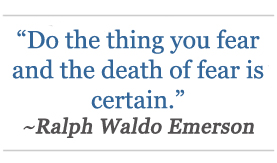 The fear of failing is often more traumatizing than the failure itself. Besides being painful, it is also paralyzing, not allowing us to act and develop our unique potential.
Instead of avoiding the thing you’re afraid of, be brave and face your fear. Look it in the eyes and ask it: What is the worst thing that might happen? The fact that you’ll fail the exam? The fact that everyone will see and hear you making mistakes? So what? You’ll pass the exam next time. And let me tell you a secret – 10 seconds after making a mistake, nobody will remember it (except for you, of course!).
With such a brave mindset, you’ll not only pass the exam the first time – you’ll also have a brilliant performance! 😉
As R.W. Emerson said, doing the thing you fear will make your fear go away. It’s easier to be brave when we know that this universal law is backing us up!
Another fear-combating tip: When you’re practicing, be in the moment. Don’t think about failure or success – simply enjoy the process! This way, there will be no space for fear. Instead of losing time being afraid, you’ll use your practice hours for improving your skills – thus minimizing the chances of failing.
3. What is a failure?
Have you ever asked yourself what is the difference between a failure and a mistake? Give it some thought! What have you noticed? I’m sure that the first thing that came to your mind was the fact that the difference between mistakes and failures resides only in our mind, in the importance we give to certain things.
If you play several wrong notes during an exam, is it a failure or a mistake? How about the fact that your finger slipped and you played C instead of C# during that important concert? Is it a failure or a mistake to forget the text and stop playing during a stage performance? How about catching a cold after working hard for several months and not being able to play at all?
If something affects you negatively on the long run, is it a failure? It is, if you allow it to be. It is, if you forget that only YOU can decide how a certain event will affect your future. We have the power of building our lives the way we want – but most people don’t even know about it!
Things are relative. An incorrect note may be a tragedy for someone, while another person will not even notice it. The way you look at things will determine the way things look at you! 🙂
4. Mistakes (and even big failures) are normal.
 It’s impossible NOT to fail. Failing or making a mistake is part of being human and learning. How many times did you have to fall in order to learn to ride your bike? If you practice yoga, how many times did you fall in order to master a balance posture? The same can be said about piano playing!
We can’t avoid making mistakes. We can’t avoid failing big time occasionally ;-). But we can certainly change our perspective, smile, accept that failing is normal and move on.
5. Lower the importance of the upcoming exam or concert.
The more importance we give a certain event, the stronger are the chances that we’ll fail. Philosophers say that this way the Universe is balancing the scales.
As a pianist, I have a simpler explanation: if you give too much importance to your next exam, your rational mind tells you: “Failure is unacceptable!” This way, you’re welcoming stress. When you’re tensed (mentally and physically) you’re not only affecting your health – you’re also increasing the chances of forgetting the text or missing the notes during the performance.
A stress-related failure doesn’t happen because you did something wrong. It is NOT a punishment and it is NOT personal. Your only mistake is called ‘lack of information’. Not knowing the laws of existence, you cannot use them to your benefit.
So – less importance equals less stress, less tension, more relaxation, more concentration – better results!
Now a little more philosophy: Things are ALWAYS less important than we think. Nature does not give ‘importance’ to its phenomena. The rain falls without importance. The change of seasons happens naturally, without emphasis. Things in themselves are not good or bad, important or not important. Things simply ARE. Only our attitude makes them seem good or bad, important or unimportant.
Let things BE. Don’t project your feelings and your opinions on them.
You are the only one who can decide what’s important and what’s not important. If you think that this particular failure will destroy your career, guess what will happen? Your thoughts will shape your reality and your future. On the other hand, if you think that this failure is not important, that it’s only a lesson you had to learn and that your career will only benefit from your mistake, then guess what will happen? Yes, it will be just like you imagined!
Don’t put emotional attachment to failure. Don’t think too much about it. Don’t make an event out of it. Let it be, learn what you have to learn and move on. And remember that things can cause emotional suffering only when we allow them to affect us by giving them importance.
6. Do your best today.
Instead of worrying about tomorrow’s exam, enjoy your practice today! Relax, concentrate, be in the present moment and do your best NOW… and beware: fantastic results will follow! 😉
7. Shake off that seriousness!
Generally, people make things too difficult and take them too seriously.
Most pianists are too serious as well – it’s a scientific fact! By the time a piano student reaches adolescence, he or she is already overwhelmed by the difficulty and importance of their musical activity. Sometimes we are so blinded by our seriousness and our grave attitude that we fail to notice the beauty of the surroundings or the fact that life is much easier than we think.
Learn to shake off your seriousness, day after day! Smile and take it easy! Your piano results will not get worse as a result, don’t worry. They will only improve! The more relaxed and casual we are about something, the better our results will be!
8. Be mindful.
Practice awareness. Don’t let your emotions guide you. Pianists and musicians are very sensitive people. However, you should know that sensitivity itself does not cause suffering – it can only increase it. The real cause of suffering is the way we look at things – our attitude.
Emotions are an inherent part of human life. You can’t make them disappear. But you can certainly be aware of them, understand them and let them go.
9. Be relaxed and confident. Think like a winner. Never give up!
 The world around us always reflects our state of mind. If you think like a winner, you’ll be a winner. If you’re a whiner and you pay too much attention to failure… you get the point! Be confident, no matter what you do – in time, the ‘fake’ confidence will become real, trust me! Breathe and be relaxed even if your knees are shaking – in time, they will adapt to the fact that they belong to a strong, confident person.
Never give up – no matter how many times you fail! Success is not about how hard you fall – it’s about getting up and trying one more time! Doing nothing is the easiest way of avoiding failure.
10. Don’t pay attention to criticism.
Of course, you should listen to constructive criticism – especially the advice of your piano teacher. At the same time, learn to make the distinction between constructive criticism and the negative remarks of those who envy you and want to ruin your day.
When someone criticizes you, don’t react. Don’t get angry or defensive and don’t try to justify yourself.
People don’t care about your failures. 99% of the time, people think only about themselves. Criticism comes from a low self-esteem. When people criticize you, they do it only to feel better about themselves or to justify their weaknesses.
11. Eradicate the feeling of guilt.
People like to manipulate others. Duty, fear and guilt are the most powerful triggers when it comes to manipulation. In school, students are forced to feel guilty for not doing their ‘duty’ – their homework or their daily practice. Does it ring a bell?
First of all, understand that you don’t have any ‘duties’ – you simply have the RIGHT to live a fulfilled, free, happy life.
Second, understand that feeling guilty after a certain failure will not accomplish anything – it will only make it harder to go on and resume your practice. Toss the guilt out of the window! It’s only an illusion! Analyze your failure instead and see what improvements you can make. Learn your lesson, smile and move on! Tomorrow will definitely be a better day!
You might ask: “Ok, and what should I do if the failure was indeed my fault, if I failed the exam because I didn’t practice enough?” Good question!
In this case, instead of feeling guilty…
12. Assume responsibility for your actions.
Your choices have consequences. If you don’t practice enough, your playing will get worse. If you don’t study a certain subject, you’ll not pass the exam. It has nothing to do with guilt – it’s only a question of choice. Set your priorities and your goals and act accordingly!
One more thing – don’t blame others for your failures. Failures are not about blaming (yourself or the others) – they’re about learning.
13. Don’t waste time on regrets.
“What if…?” This is probably one of the most useless and time-consuming questions in the world! You cannot change the past. Don’t lose your precious present obsessing about your past mistakes and regretting your choices. Make a better choice NOW instead and create a better future!
14. Get enough sleep and rest!
Yes, I’m serious! Lack of sleep and exhaustion can make you see everything in negative colors. When your body and your mind are tired your immunity will decrease, you’ll get sick more often, you’ll feel depressed and irritated… can we talk about productivity, enthusiasm and fulfillment in such circumstances?
15. Everything is a choice.
Our attitude is a choice. Our perspective on things is a choice. The way we react to failure is a choice. Remember that every moment, you have the POWER and the RIGHT to choose: you can choose to smile or to scowl; to be positive or to worry; to react to criticism or to mind your own business; to despair or to seek inspiration; to blame or to understand.
We can’t control everything. Yes, there are no limits to perfection and we can constantly improve our playing, but it’s not possible to control, up to millimeters, how each finger will ‘land’ on the keyboard. Making mistakes is human. Failing is human. Sometimes you cannot avoid failure. But you can certainly choose to change your attitude towards failure.
16. Widen your horizons, learn, diversify!
If you’re a little frog living in a small pond, the fish next door may seem really frightening and a passing duck – the end of the world. If you’re a dolphin swimming in the ocean, you’ll not even notice that fish or that duck.
Everything is a question of perspective.
Music is not the center of the universe. Yes, you read that right. Of course, music is an amazing art, it is inspiring, life-changing (even life-saving), fascinating, mysterious, jaw-dropping and overwhelmingly beautiful – but it is only ONE aspect of this amazing miracle we call life.
If you play piano all day without learning other things, without spending time outdoors, without communicating with interesting people, you risk ending up like that frog – your first failure will simply destroy you because you cannot see the bigger perspective.
If you want to have success in your piano playing, you need to have an open mind. You may be a good musician, but unfortunately this does not automatically make you a wise person. Don’t be afraid to learn – and don’t listen to those who tell you that ‘there is no way of explaining certain things – they simply happen’. This ‘fatalism’ arises from laziness and lack of information. Of course, you cannot ‘cancel’ an upcoming storm, but the way you react to this storm makes all the difference!
Diversify your activities. Learn all the time. Study how life works. Learn from wise and successful people. Read Tao Te Ching, study Zen, read books like Creative Visualization and Living in the Light by Shakti Gawain, Reality Transurfing by Vadim Zeland, The Power of Less by Leo Babauta, Think and Grow Rich by Napoleon Hill etc. If for some reason you don’t like my recommendations, there are hundreds of other great books that can help you become wiser, stronger and happier. Allow yourself to be curios and study other aspects of life besides music – reading a book about meditation, financial success or personal development can be a true revelation in a time of struggle.
Maybe we are not capable of having absolute knowledge. But we are certainly able to understand the laws of our human life.
Maybe we cannot avoid certain failures. But the way we handle them determines our success in music and life.
The world is your mirror. What will it reflect today?
P.S. What was your biggest ‘failure’? How did you handle it? Now, after several months/years, does it seem as frightening as when it happened? Share your experience in the comments below! 😉
If you enjoyed this piano tutorial, here are some other piano learning and practice topics you’ll like:
How to Use the Sustain Pedal Correctly: The Bio-Mechanics of a Healthy Piano Pedaling Technique
No Time to Practice? 5 Powerful Solutions for Lack of Time
The life-changing benefits of learning classical music
How to avoid piano injuries | Get rid of tension and pain in your hands, wrists, arms and shoulders