The flowers of all the tomorrows are in the seeds of today.
~Chinese Proverb
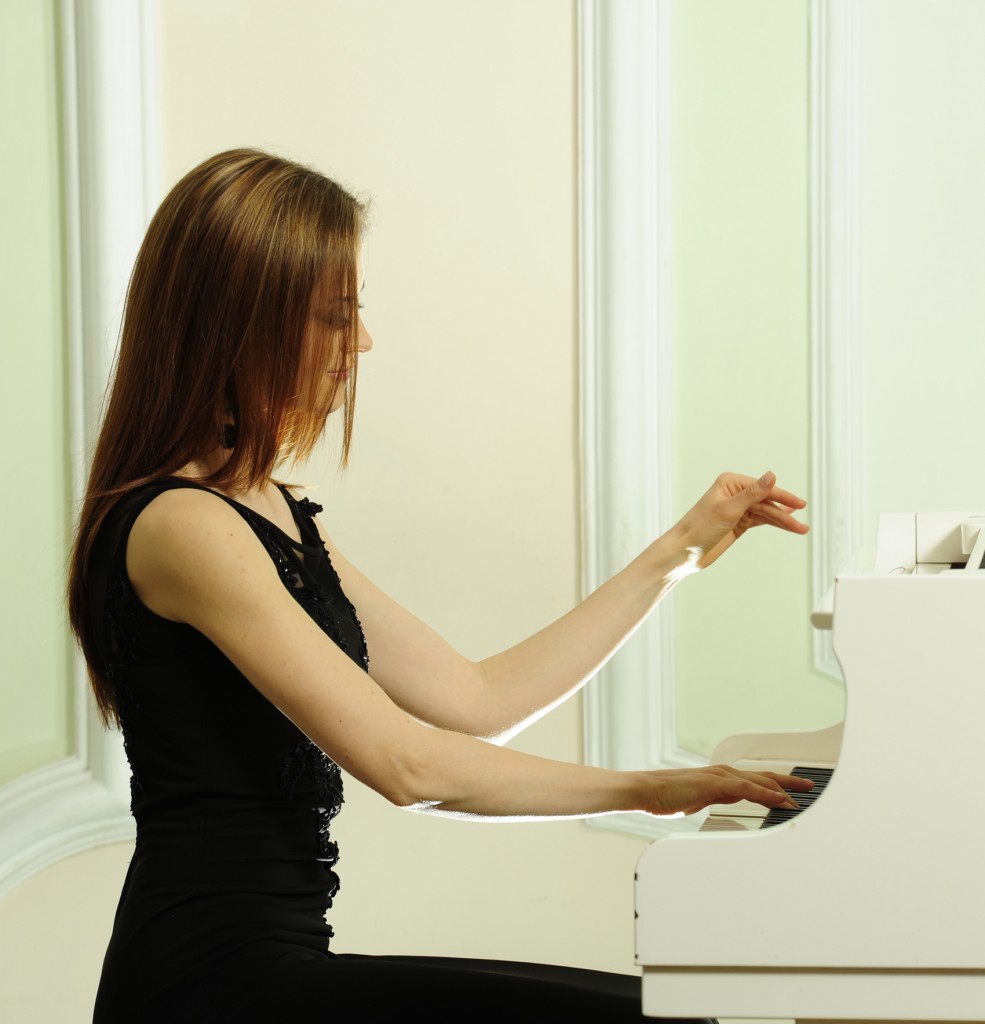 Expressive and technical skills, hearing, imagination, focus, productivity, even inspiration and artistry – in piano playing, everything depends on the quality of our daily practice.
Correct practice can be rightfully called the cornerstone of piano playing. If used properly ;), this magic key can open the door to wonderful pianistic skills that will allow you to play beautiful music with ease and fluidity, to expressive and technical brilliance, to inspired successful performances, and ultimately to the awesome feeling of joy and fulfillment that comes from doing what you love the most.
But what does the term ‘correct practice’ really mean? Watch the video below and you will find out! 😉
In today’s tutorial, besides sharing the key principles of correct piano practice, I also demonstrate, step-by-step, how to practice the beginning of the reprise from the beautiful Nocturne in E Minor op. 72 No. 1 by Chopin. When it comes to learning, only real action can transform knowledge into skill!
Before we start, I want to share with you another quote that I love:
We are what we repeatedly do. Excellence, then, is not an act, but a habit.
~Aristotle
Each time you sit at the piano, you’re building habits.
Every practice session counts, and the quality of your work will always be reflected in your future piano accomplishments!
So why not start to build great practice habits today?
Enjoy! 😉
Video highlights:
00:17. Introduction. How much should we practice vs HOW should we practice?
01:25. PianoCareerAcademy.com is one year old!!!
02:36. Everything begins with the meaning of the music.
02:49. Piano playing is a mental activity.
03:17. Analyze and understand the music.
05:33. Harmonious piano playing happens simultaneously on two levels.
05:55. How should we practice? Step-by-step practice demonstration of the reprise from Chopin’s Nocturne op. 72 No. 1.
06:24. Let’s start with Slow Practice.
06:45. Practicing the LH.
07:14. Avoid mechanical practice.
07:35. Don’t play big fragments at once!
08:27. Pay attention to posture and arm relaxation.
09:05. The wrist navigation technique.
10:00. The main purpose of slow practice: getting familiarized with the structure of the text and assimilating all the needed gestures for bringing out the character of the music.
10:22. Mental anticipation. Focus. Be aware of what you play.
10:44. Every repeat of a passage should be better than the previous one.
11:56. Relaxed muscles = noble sound.
12:15. Keep a rounded hand shape and firm fingers.
12:42. Playing in a relaxed manner doesn’t mean having wobbly fingers! The ‘soldiers’ and the ‘back-up’: fingers and whole-arm.
13:30. The benefits of deep practice.
14:43. Increasing the tempo gradually.
15:03. The Magnifying Glass Practice Method: Analyze the core problem and solve it first!
16:26. Practicing the RH.
16:29. Applying the Intoning Technique to the melody.
16:40. Working on sound quality and phrasing.
18:40. How to practice ornaments.
21:33. Choose a comfortable fingering from the start.
22:21. Improving our legato.
23:10. A few words on confidence, freedom and relaxation.
23:39. Practicing the double jump.
24:55. Small hands? Compensate with wrist navigation!
26:16. Keep your ears on the melody! 😉
27:29. Productive practice is a question of balance: slow vs fast practice.
28:28. The ‘faster than needed’ practice method.
29:52. Practicing the descending passage.
30:20. Acquiring technical stability.
32:22. What is positional playing?
34:18. Allow the new material to ‘settle in’!
34:58. Practicing both hands together.
35:19. Polish the connections between phrases or fragments.
35:47. Work on the sound quality simultaneously with learning the elements of the text.
36:03. Practicing without pedal.
37:07. Tempo, rhythm and rubato.
38:24. Working on the sound balance between the melody and the accompaniment
41:15. Improving our phrasing. Focusing on the Horizontal Flow.
42:10. How to ensure that the practiced fragment is mastered.
42:55. Record yourself!
44:04. How to structure a productive and enjoyable practice sessions.
44:14. The Warm Up.
44:45. HOW should we practice scales or technical exercises?
45:13. The key secret of correct practice: focus on quality, not quantity!
45:36. Quantity is relative.
46:00. Increase the practice time gradually!
46:48. Focus on one piece for at least 30 minutes!
47:15. Practice structuring according to your level and objectives
47:43. Avoiding Hand Injuries and Muscle Pain
48:48. Practice structuring according to the complexity of the piece
50:05. Conclusion. The way you practice determines the way you perform.
50:47. And a bonus tip for ‘dessert’: ENJOY your practice!!!
Today – 15th of February 2013 – our Piano Coaching Program at PianoCareerAcademy.com turned ONE YEAR OLD!!!!
For this occasion, I have prepared a special anniversary surprise for our members – a ‘retrospective in perspective’ video that celebrates the most important moments of our first year, also ‘disclosing’ some of our exciting plans for the future!
After posting this video on the forum, I decided to share it here (on PianoCareer.com) as well :D. In only 14 minutes, you’ll be able to see lots of video excerpts from the most important tutorials available on our site – and much more! 😉
Do you want to have full access to these and other exclusive piano playing tutorials? 😀
Join my Piano Coaching Program at PianoCareerAcademy.com and get ready to discover a new approach to piano playing that will transform your expressive & technical skills and bring them to a whole new level!
And now – a little advice:
Piano playing is not about pressing the correct notes with the right fingers and an appropriate rhythm.
Piano playing is about making music, about sending a message, about touching the audience’s emotions, about helping others, about finding joy and fulfillment. Don’t forget about this when you practice!
Instead of learning ‘songs’ – learn how to play piano! Focus on mastering powerful skills that will allow you to learn and perform ANY piece.
In everything we do, HOW is much more important than WHAT or HOW MUCH. And, above all, WHY makes all the difference! 😉
The way we practice determines the way we perform. HOW are you going to practice today?
Many new articles and video tutorials are coming soon on PianoCareer.com! Follow me on Facebook, Twitter or LinkedIn (and now also on Pinterest!) to get instant updates, support and motivation! 
If you enjoyed this piano tutorial, here are some other piano learning and practice topics you’ll like:
No Time to Practice? 5 Powerful Solutions for Lack of Time
Developing a Brilliant Piano Technique – The Holistic Professional Approach
Bach-Liszt – Organ Prelude in A Minor, BWV 543. Detailed Piano Tutorial and Real-Time Practice